CAN WE TEACH DOGS TO LOCATE CRYPTIC
ENDANGERED INSECT SPECIES FOR
EFFECTIVE FIELD RESEARCH?
Introduction
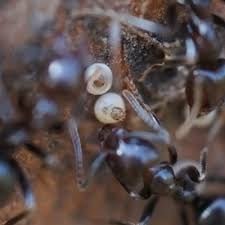
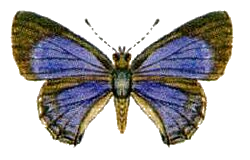
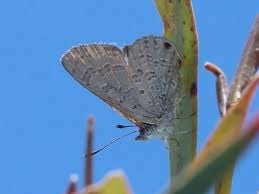
The Critically endangered Small Ant Blue Acrodipsas myrmecophila butterflies lay their eggs on or near Coconut ant nests, where the hatched caterpillars are collected, protected and attended by the ants. In response to this protection, the caterpillars produce a sugary substance on their body, which the ants feed on without harming the caterpillar. This forms an obligate relationship between the Coconut ants and the Small Ant Blue butterflies, who can not survive without the attention of the ants but the ants can survive without the butterfly.
Detection dogs are an increasingly important tool in conservation. The use of trained dogs can significantly reduce the human effort, improve field survey accuracy, and increase area searched compared to traditional on-ground survey methods that rely on human techniques.
Both the attendant coconut ants and butterfly species are presently in decline due to land use change, clearing and other environmental issues.
Questions
- CAN TRAINED DOGS LOCATE A SPECIFIC ANT SPECIES MORE EFFECTIVELY
THAN HUMAN FIELD RESEARCH TECHNIQUES? - CAN WE TRAIN SCENT DETECTION DOGS TO DISTINGUISH BETWEEN
SIMILAR ANT SPECIES?
Materials & Methods
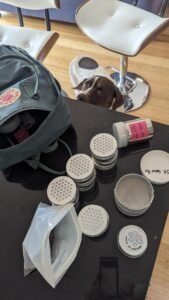
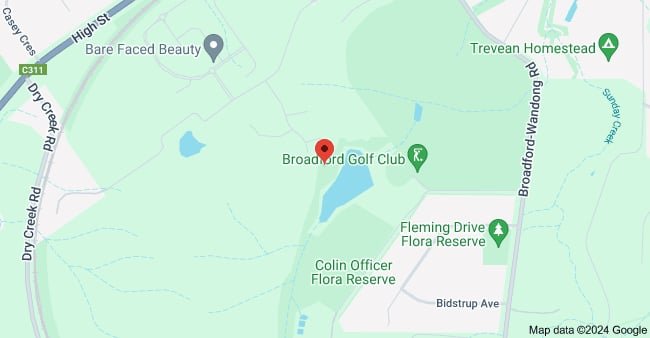
Coconut ant Byre was collected from one of only 2 known positively identified locations in the Colin Officer reserve, Broadford, Victoria. Both dogs used in this study are averse to ants, so the decision was made to use the Byre, which was of great interest to both dogs.
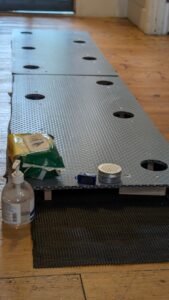
The second phase of testing introduced a similar ant species odour, the ant byre had been collected and stored in the same manner as the focus odour, but the dogs had never been exposed to the new odour— Ochetellus sp. and the test set-up was identical to the first phase but with the addition of the similar ant byre in a separate container in a randomised hole in the test board. The handler and dogs were never in sight of the set-up until called through by the research assistant, and the same procedure to find the target odour followed.
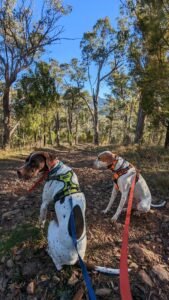
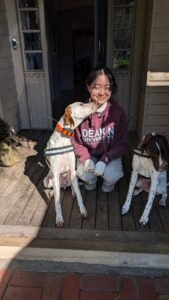
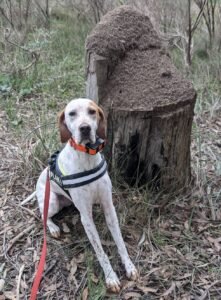
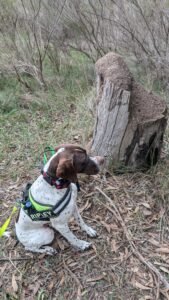
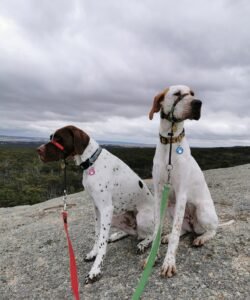
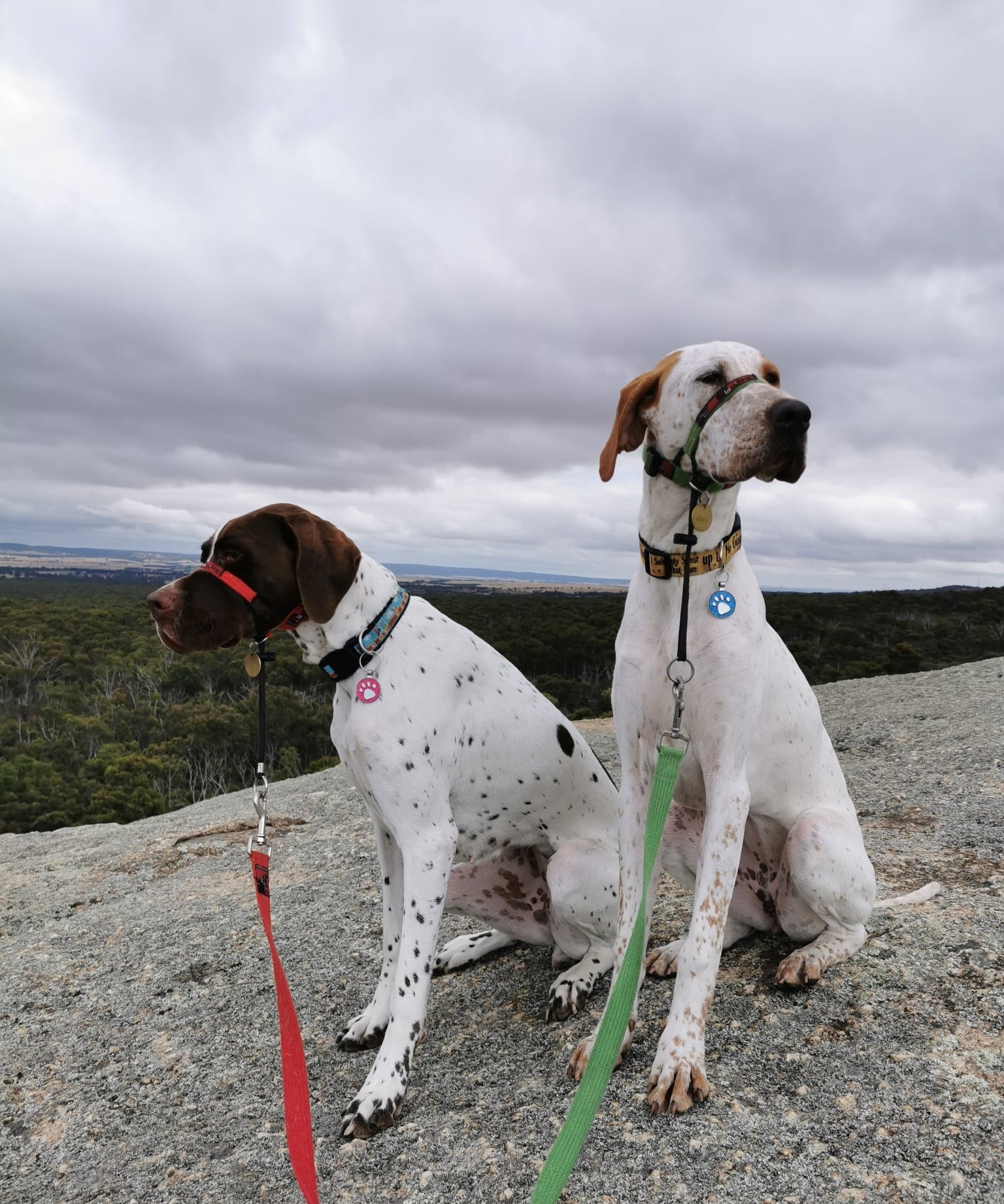
The two dogs used in this study are English Pointers, both possess high drive, have proven endurance, agility, and strong trainability. The two dogs have strong innate behaviours due to their working heritage and breeding. Both dogs were initially trained in passive-indication scent-detection on Koala scat , and were two years and three years of age respectively, at the onset of the new target odour training for Coconut ant byre.
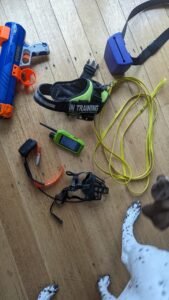
Training dogs to indicate passively when they locate a target odour requires a system of Operant Conditioning. The training for this odour was conducted in two phases, the primary phase occurred indoors in a controlled environment, with no natural elements such as wind or humidity or living distractions; The second phase incorporated an outdoor setting which utilised some controlled factors, such as odour placement and route direction. The dogs were taken to the field location in the natural habitat of the target odour species, however that did not form part of the research.
During each of the training phases, at the start of a test run, each dog was presented with a sample of the focus scent in a small cannister with a perforated lid to familiarise the dog with the matching of the
target odour.
Using a double-blind technique, where research assistants set the focus odour locations into a numbered randomised hole in the test board each test run, using gloves and cleaning surfaces between each run. The dog was called through, asked to examine the cannister and then asked to “Find” the target odour. An indication is logged when the dog sits and points its nose at the target it has found. The handler then approaches, examines the indicated item and click-and-rewards a correct indication. If the dog was incorrect, the handler asked the dog to “Find “ again and the same procedure followed. Once a target had been identified, the dog and handler left the test environment and waited out of sight to be recalled by the research assistant for the next test run after
cleaning the board, removing the odour and replacing it with a fresh cannister of byre.
Results & Discussion
Sensitivity S, Efficacy E and Specificity Sp results per dog for
all test runs
Results of all test runs for both dogs showing Papyrius as the focus odour ant byre, Ochetellus represents the similar species which was introduced to test for specificity, effectiveness and sensitivity.
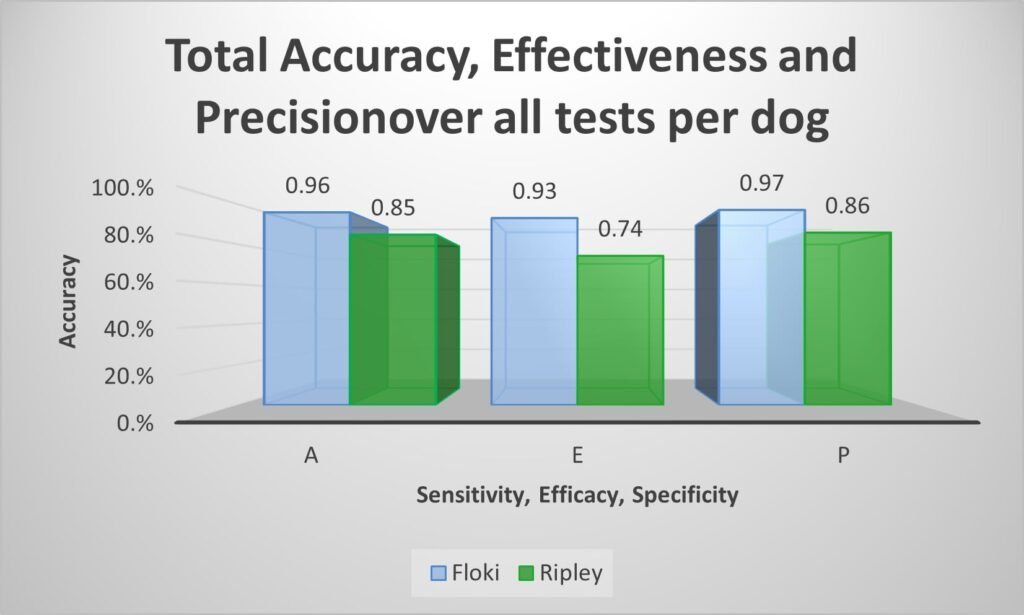
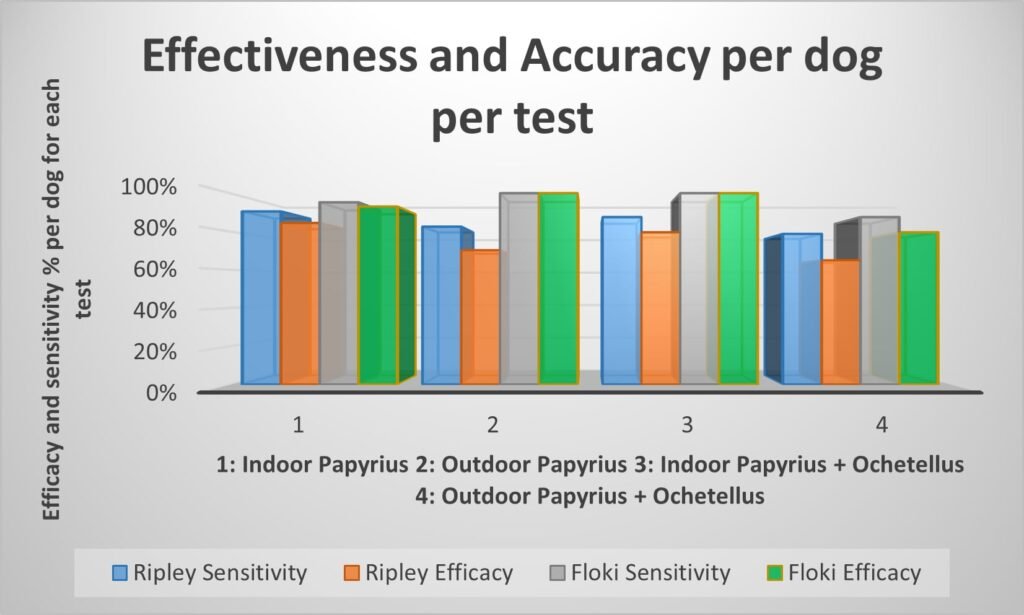
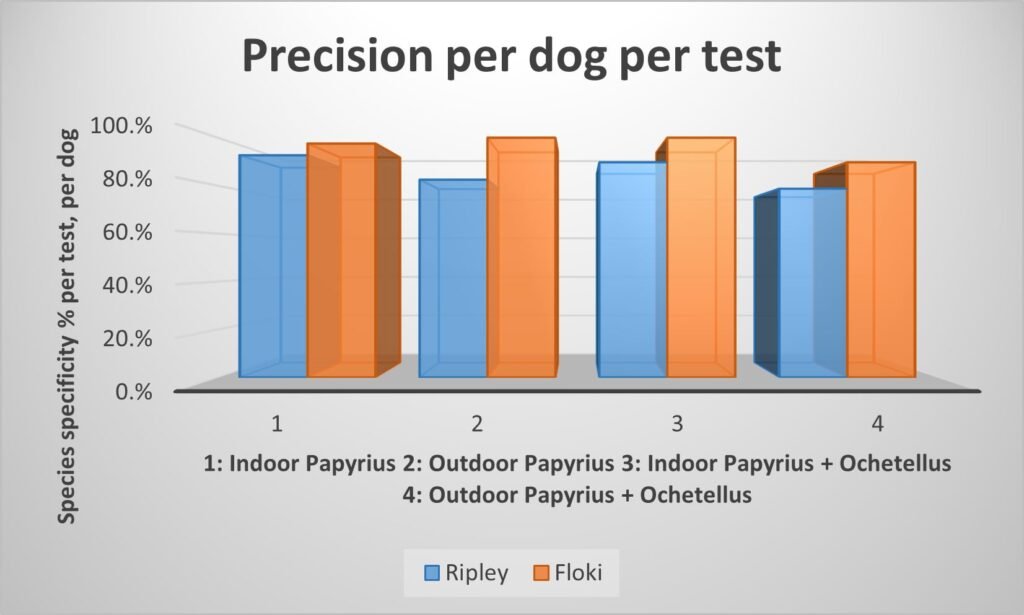
Controlled test environments produced positive results in high numbers, with Floki offering 96.9% correct indications, very low distraction rate of 2 out of a total 161 tests, while Ripley offered 85.6% correct indications, with a higher distraction result of 15 out a total 167 test runs. These results indicate that training dogs to search and indicate on a focus odour is highly achievable. Success in the field however depends on many criteria such as the dogs drive levels, temperament and interest in the work.